
Highlights
-
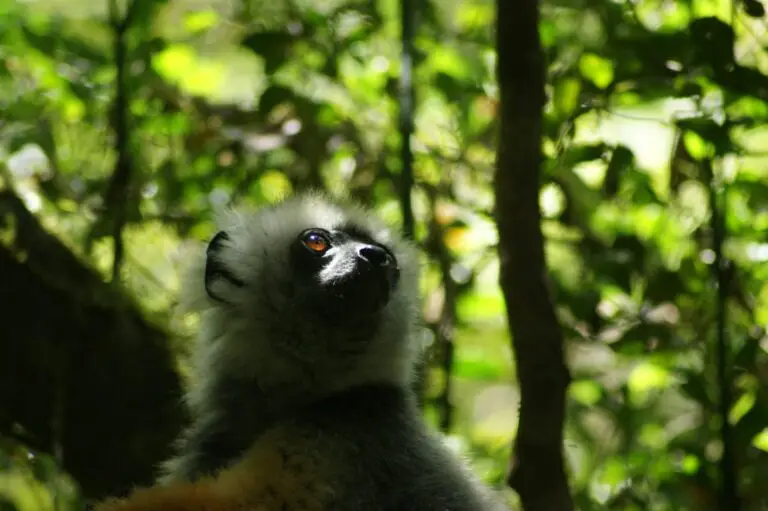
Mantadia and the lemur island of Vakona, near Perinet.
-
Three nights in Ranomafana, where wildlife is best seen from 5 to 10 am.
-
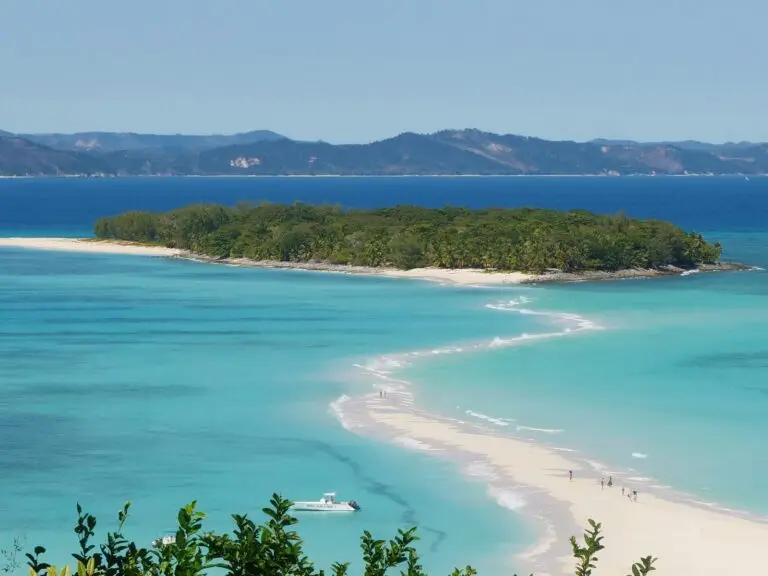
Four nights on the Masoala Peninsula, reached by speed boat.
-
The red ruffed lemur, the helmet vanga and the frogs of Nosy Mangabe.
Day by day
Day 1
Arrival in Antananarivo
Arrival at Ivato International Airport. After customs, you are met and assisted by an English-speaking agent.
Day 2
Antananarivo – Perinet
About three hours' drive to Perinet, 150 km east of the capital, through rice paddies and wooded hills. Halfway, stop at the Pereyras reptile farm to see about twenty species of chameleon, from Parson's chameleon to the tiny Brookesia minima, as well as snakes, mantella and tomato frogs, geckos and tenrecs.
Day 3
Perinet
Morning in Mantadia National Park, home to many endemic birds and to lemurs such as the bamboo lemurs, with its evergreen rainforest, sacred waterfall and natural pool. A picnic lunch is advised. After dark, a guided walk to look for mouse lemurs, woolly lemurs and pygmy chameleons.
Day 4
Perinet
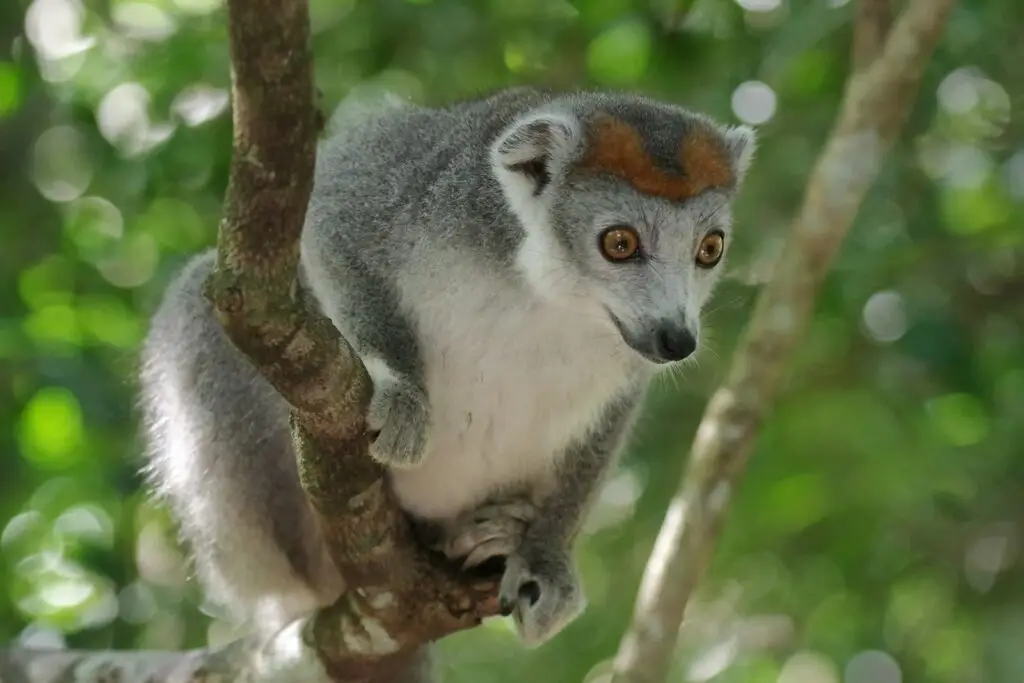
Visit to the Vakona private reserve. On its lemur island, four species live and come close to visitors. The second part of the visit shows the fosa, the largest carnivore of Madagascar, as well as radiated tortoises and boas.
Day 5
Perinet – Antsirabe
Transfer to Antsirabe, about 170 km south of Antananarivo, a town known for its many pousse-pousse and for its polished semi-precious stones and ammonites.
Day 6
Antsirabe – Ranomafana
About seven hours' drive to Ranomafana, a national park established in the early 1990s to protect the golden bamboo lemur. The area is dominated by the Namorona River, fed by many streams that end in a waterfall close to the park entrance; the forest combines secondary and primary forest.
Day 7
Ranomafana
Wildlife viewing is best from about 5 to 10 am: this is one of the most important mammal sites in Madagascar. Lemurs: the golden, greater and grey bamboo lemurs; the fosa and the aquatic tenrec are harder to see. Birds: blue coua, red-fronted coua, Pollen's vanga, tylas, Henst's goshawk, forest rock thrush, collared nightjar, sunbird-asity, velvet asity and Madagascar flufftail. Reptiles: Parson's chameleon, the Madagascar tree boa, day geckos, leaf-tailed geckos and many frogs.
Day 8
Ranomafana
Another full day in another part of the national park. Night walk.
Day 9
Ranomafana – Antananarivo
A travel day of about twelve hours' drive.
Day 10
Antananarivo – Maroantsetra – Masoala
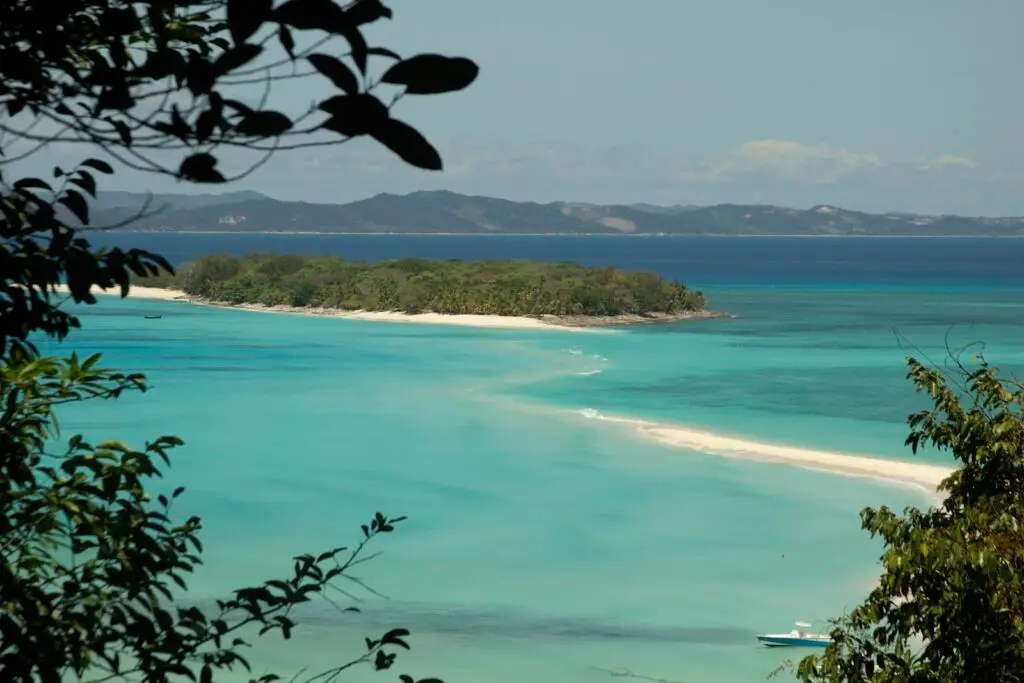
Flight to Maroantsetra, on the north-east coast, then about two hours by speed boat to the Masoala Peninsula, with a good chance of seeing dolphins, and humpback whales from July to September. Landing on the beach in front of your lodge. Afternoon on the beach or exploring the surroundings, then a night walk in the forest behind the camp to look for the weasel sportive lemur, the brown mouse lemur and chameleons.
Day 11
Masoala
A short walk along the beach leads to the entrance of Masoala National Park. Its wildlife is very rich, and the highlights are the red ruffed lemur and the helmet vanga; Bernier's vanga, the serpent eagle and the aye-aye also live here but are very elusive. Free afternoon, then a night walk in another part of the forest.
Day 12
Masoala
Morning in a coastal forest: birds, frogs and chameleons, all endemic. In the afternoon, a canoe trip on the Tampolo River.
Day 13
Masoala – Nosy Mangabe – Masoala
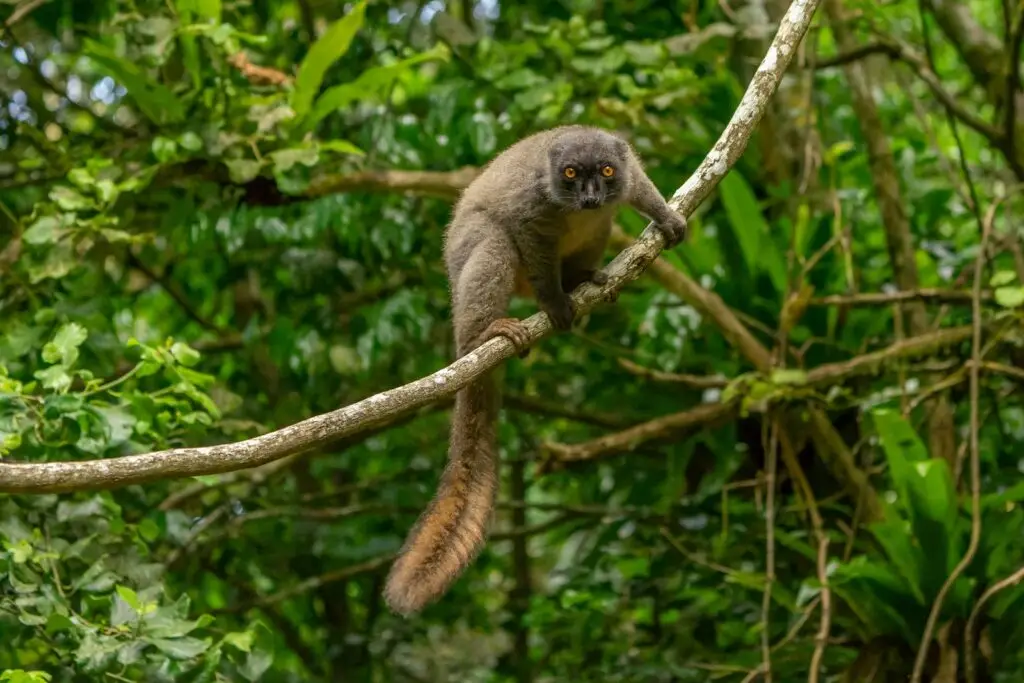
By speed boat to Nosy Mangabe, to see the colourful Mantella laevigata frog and leaf-tailed geckos sleeping during the day, with white-fronted brown lemurs jumping from tree to tree. Back to the lodge.
Day 14
Masoala – Maroantsetra – Antananarivo
Back to Maroantsetra and flight to Antananarivo.
Day 15
Departure
Depending on your departure time, a city tour, a visit to the Tsimbazaza zoo or to the Lemurs' Park, and shopping at the handicraft market before your flight. Your guide assists you at the airport.
Route map
Price and options
Quote on request, according to the season, the number of travellers and the level of comfort.